| 英文摘要 |
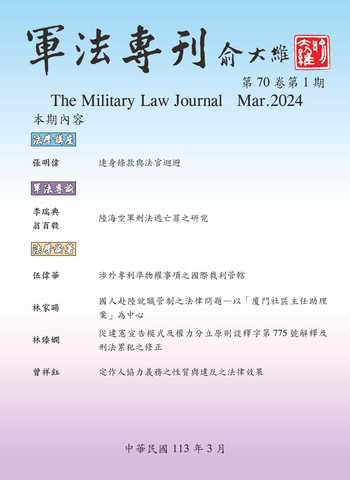
Following the 2013 amendment to the Military Trial Act, Taiwan’s military justice system confronts a critical crisis regarding the transition from peacetime to wartime operations. The current institutional framework has resulted in a complete operational vacuum for military adjudication during peacetime, giving rise to three primary concerns: 1. Systemic Disjunction: There exists a temporal lag between the statutory definition of“wartime”and the practical“emergency response phase”of military operations. Furthermore, the absence of peacetime exercises raises concerns that the system will be unable to function effectively ex nihilo upon the outbreak of conflict. 2. Human Capital Discontinuity: With the suspension of peacetime military trials, recruitment examinations for military judges have ceased, leading to a significant brain drain. Consequently, the system faces the predicament of a severe shortage of qualified jurists during wartime. 3. Diminution of Command Authority: The amendment abolished the auxiliary investigative powers previously vested in unit commanders. This reduction will severely constrain military prosecutors regarding resource mobilization and investigative efficiency during wartime.
Adopting a pragmatic perspective grounded in operational reality, this article posits that while the current legal regime effectively safeguards human rights in peacetime, it poses a significant risk during a“state of exception”(i.e., war). The absence of an operable legal order at such critical junctures threatens to compromise military morale and combat effectiveness. |





 本站僅提供期刊文獻檢索。


