| 英文摘要 |
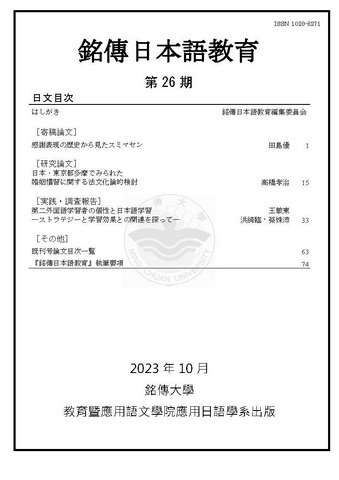
本研究は、台湾の大学日本語文学科に在籍する香港人学習者4名を対象に、台湾の日本語学習環境において彼らが経験・遭遇する不安と、その不安との向き合い方に注目し、不安の個別性とその変容を質的に分析した事例研究である。調査には半構造化面接法を用い、協力者から得られた語りのデータを質的データ分析手法であるSCATにより分析した。
分析の結果、学習者が抱える不安の内容や程度、変容の過程は、学習者要因、学習環境要因、社会文化的要因の相互作用の中で個別に形成されていることが明らかとなった。また、それぞれの協力者は、自らの性格や経験、置かれた状況に応じて、さまざまなストラテジーを用いながら不安と向き合い、台湾の学習環境への適応と自律を進めていた。とりわけ、香港人学習者は台湾では母語を活用しづらく、それゆえJFLという非母語環境での日本語学習は不安や孤立感の要因となりやすい。このため、学習者へのいっそうの理解ときめ細やかな支援の必要性が高いことが示唆された。
本研究は、こうした香港人学習者の不安の実態を丁寧に捉え直すことで、台湾の日本語教育における学習者への個別的な支援のあり方を再考する手がかりとなるだろう。
This qualitative case study examines the anxieties of four Hong Kong learners in a Japanese language and literature department in Taiwan, and how they cope with them, to explore their individuality and transformation. Semi-structured interviews were conducted, and participants’narratives were analyzed using the qualitative method SCAT.
The analysis found that the content, degree, and transformation of anxieties were shaped by interactions among learner, environment, and socio-cultural factors. Each participant, according to personality, experience, and context, employed strategies to address anxieties, promoting adaptation and autonomy in the Taiwanese environment.
Hong Kong learners in Taiwan have limited chances to use their mother tongue; thus, learning Japanese in a non-native JFL environment can cause anxiety and isolation. This underscores the need for deeper understanding and more careful learner support.
By re-examining the realities of Hong Kong learners’anxieties, this study provides a basis for reconsidering individualized support in Japanese language education in Taiwan. |





 本站僅提供期刊文獻檢索。


