| 英文摘要 |
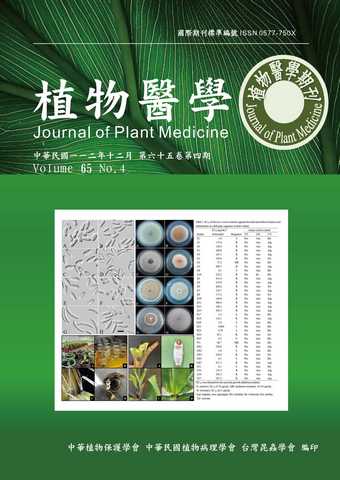
Peanut (Arachis hypogaea) is an important grain crop in Taiwan. There are many kinds of diseases and pests during the cultivation process. In recent years, peanuts in Yunlin area have wilted in the middle and late growth stages. Wilted plants show symptoms of dry rot, pycnidia densely raised at the diseased parts of the stems. Under microscopic examination, two types of spores can be seen: oval, transparent, single-chambered immature spores and oval, brown, mature spores with a septum in the center and obvious longitudinal stripes. The colony of isolated pathogen on PDA was initially off-white, then turned into gray-black fuzzy colonies with pycnidia formed. Morphological identification and phylogenetic analysis showed that the fungus belonged to the genus Lasiodiplodia, completing Koch's postulates and being determined to be an emerging disease on peanuts. In 2021-2022, pathogen strains from different fields were collected for pathogenicity analysis, phylogenetic analysis, temperature growth tests, fungicides sensitivity tests, seed coating for control tests, etc. The results showed that all common varieties of peanut in the field can be infected. The results of the pathogen phylogenetic analysis showed that the collected strains contained four related species, including L. pseudotheobromae, L. iraniensis, L. hormozganensis and L. theobromae. Among them, L. pseudotheobromae was the most, accounting for 58.8% of the collected strains. It is speculated that it should be the main pathogen in the field. The mycelium of the pathogen grew rapidly in an environment of 20-30℃. Iprodione could completely inhibit the mycelium growth, while Thiabendazole had poor inhibition effect on most of the tested strains of L. pseudotheobromae. Seed coating Iprodione and Thiabendazole can significantly reduce the incidence of disease in seedlings, but one group of seeds treated with Thiabendazole still had a disease rate of about 50%, indicating that there may be fungicide-resistant strains in the field. There is no record of Lasiodiplodia spp. causing peanut wilt in Taiwan, but it has become common in recent years. This study is the first official report in Taiwan. On diseased peanut plant, pycnidia were visible on the ovary stalk and pod, and the same pathogen could be isolated from the seeds. When peanut seeds collected from diseased plants were sown, the germinated plants would produce the same symptoms as those in the field, so it is speculated that the first inoculums source of infection may come from the seeds. |





 本站僅提供期刊文獻檢索。


